Nick Collins · Maritime Historian

For most of recorded history, the dominant powers were maritime powers.

Trade routes determined which civilisations flourished and which collapsed. Nick Collins's three-volume series makes the case that maritime trade — not conquest, not ideology, not geography alone — is the primary engine of human progress.

Shortlisted for the Mountbatten Maritime Literary Award · Cambridge-educated · Written from the inside

“Remarkable and fascinating… History with a capital H.”

— Professor Geoffrey Till, The Naval Review
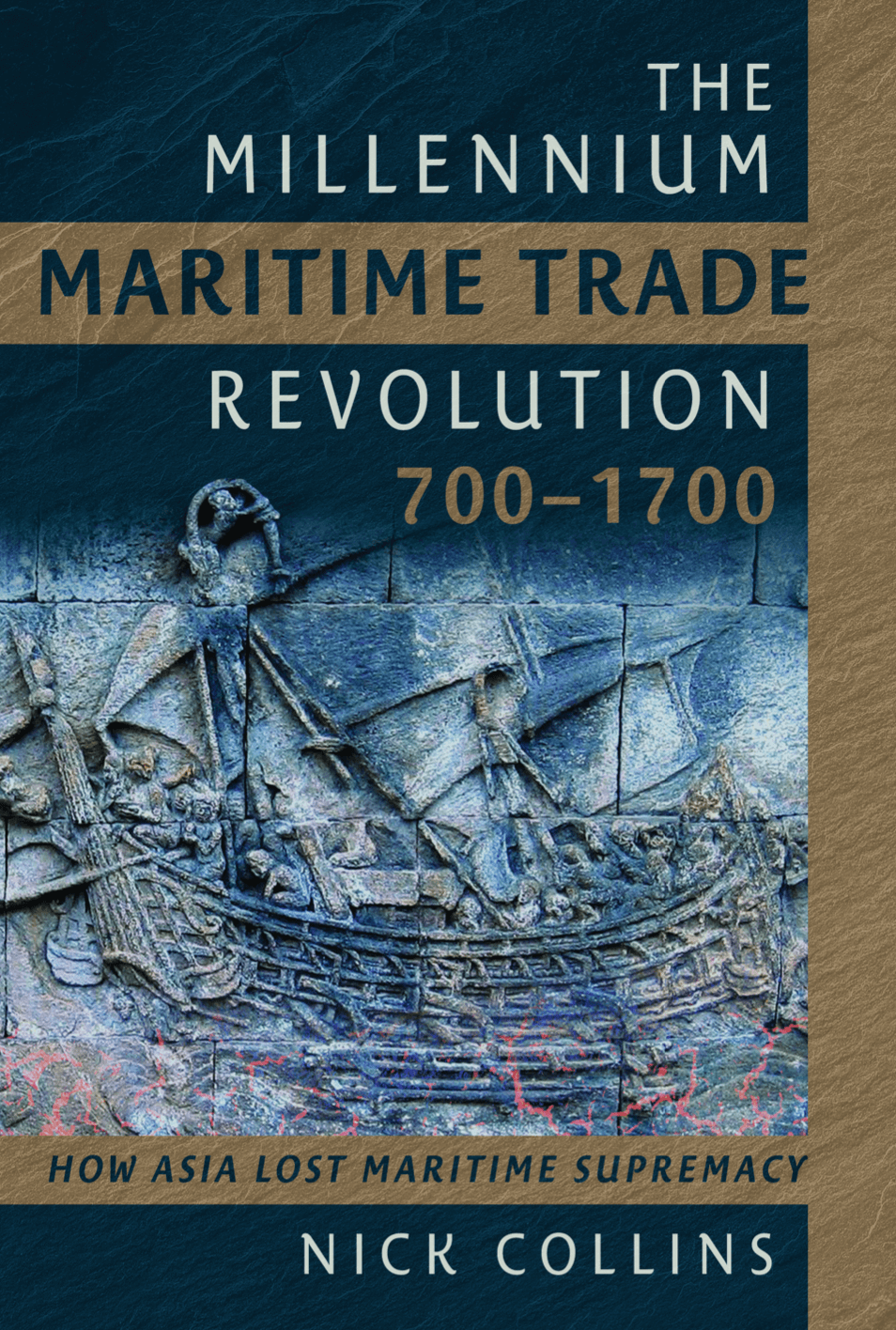
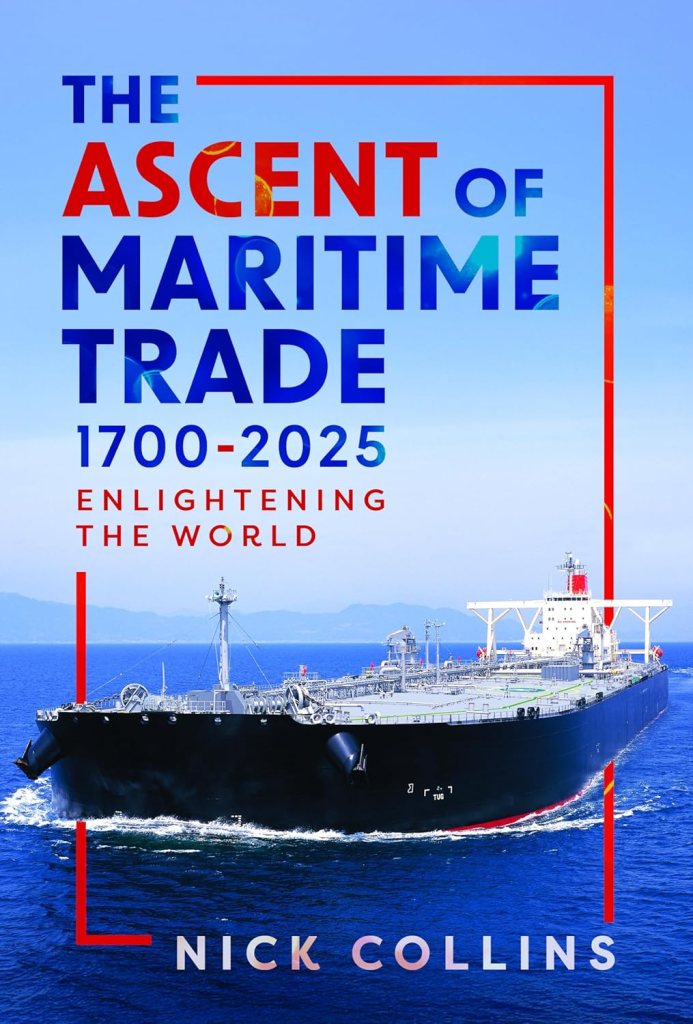
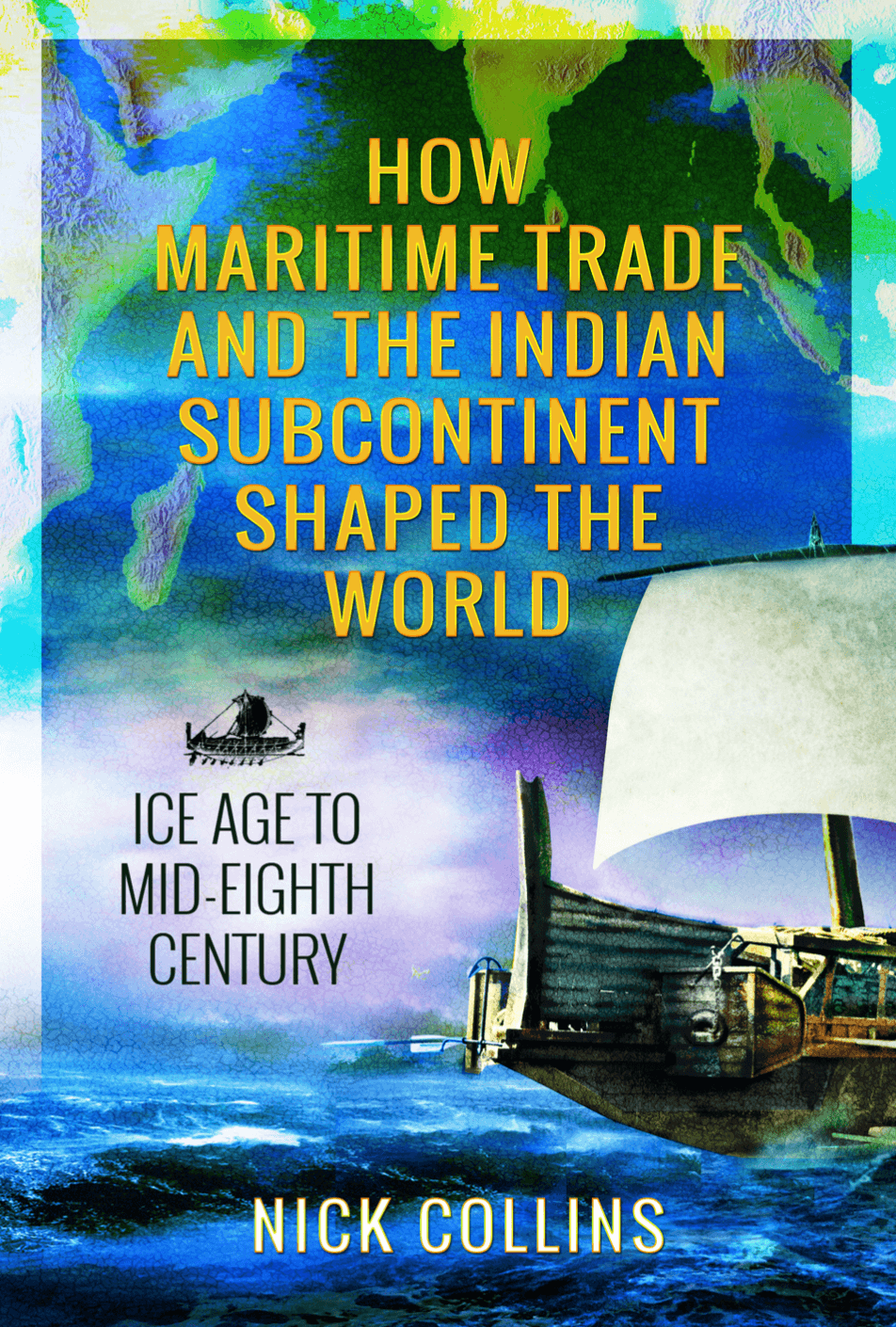
How Maritime Trade and the Indian Subcontinent Shaped the World — book cover The Millennium Maritime Trade Revolution 700–1700 — book cover The Ascent of Maritime Trade 1700–2025 — book cover
The Trilogy

A complete history of maritime trade

Three volumes tracing the sea's role as the great engine of world history — wealth, technology, ideas and power, carried by ship.

How Maritime Trade and the Indian Subcontinent Shaped the World cover
Shortlisted · Mountbatten Maritime Literary Award
Volume I · Ice Age to Mid-Eighth Century

How Maritime Trade and the Indian Subcontinent Shaped the World

When much of Europe and northern Asia lay under ice, the Indian Ocean was already shaping the world. After the Flood (c.5600 BC), the first long-haul trade routes forged kingdoms and empires, pushing deep into the Mediterranean. Jain and Phoenician merchants carried Indian ideas as well as goods to Greece; the Trojan War was fought over access to Black Sea grain; and Rome's 1st-century Empire was bankrolled by taxes on Indian spices, gems, pearls and medicines.


The Millennium Maritime Trade Revolution cover
Shortlisted · Maritime Foundation Best Book 2024
Volume II · 700–1700 · How Asia Lost Maritime Supremacy

The Millennium Maritime Trade Revolution

In 700 AD, Europe's maritime trade was struggling to recover from centuries of collapse. Indian Ocean volumes surged east, birthing Srivijaya's choke-point empire and from the 10th century Song China's unmatched civilisation. By 1370, Asia's maritime lead looked permanent. It wasn't. Flawed policy in Asian states, combined with Europe's stuttering re-embrace of trade through Venice, Genoa, Bruges, London, Antwerp and Amsterdam, reversed the picture by 1700 — revealing how trade policy built and destroyed empires.

The Ascent of Maritime Trade 1700–2025 cover
New · 1700–2025
Volume III · Enlightening the World

The Ascent of Maritime Trade

The Maritime Enlightenment drove economic liberalism and humanitarianism in ways the continental Enlightenment could not. America's War of Independence had an illegal maritime trade at its core; Britain's long decline began when political indifference replaced active encouragement of shipping; and the post-war rise of Japan, Korea, Taiwan, Singapore, China and the UAE tells the same story in reverse. Includes a searching examination of shipping's path to net-zero.

Not sure where to begin? Read the first chapter free →

Praise for the Trilogy

What scholars and reviewers say

From naval historians, academic reviewers and the maritime press.

“A vital text for today. An outstanding dissection of the development of global shipping across three centuries — informed by profound insight and written with precision.”

Professor Andrew LambertThe Ascent of Maritime Trade

“I am utterly astonished by it… clearly a most important work. The control of detail is remarkable, and most enlightening.”

Dr Ronald HyamHow Maritime Trade… Shaped the World

“This book deserves to be widely read… fascinating and convincing, written with skill and enthusiasm.”

Emeritus Professor Malcolm FalkusHow Maritime Trade… Shaped the World

“Well written and informative… While I can single out many other issues and topics, the thing that impressed me the most was [the] attempt to put India on the map of world history.”

Alfons van der KraanHow Maritime Trade… Shaped the World

“Refreshingly, a global history that does not centre on European successes and failures… an engaging, well-written story of the supremacy of maritime trade.”

Marion UckelmannThe Millennium Maritime Trade Revolution

“A splendid, invigorating and intellectually challenging book that repays careful and considered study. Accessible and engaging.”

Dr Keith NuttalThe Ascent of Maritime Trade
The Newsletter

Maritime Trade History, in your inbox

Nick writes regularly on Substack — essays, arguments and discoveries from forty years in maritime trade and a lifetime in history. Free to read, delivered by email.

  • The Indian Ocean as cradle and catalyst of civilisation
  • Why Asian maritime supremacy collapsed — and what replaced it
  • Europe's debt to ancient Indian-origin ideas
  • Interviews, book extracts and reading notes

Join readers of the Maritime Trade History Substack

Enter your email — every new essay arrives in your inbox.

Browse all essays on Substack →
From the Newsletter

Latest essays

Watch & Listen

On television, talks & podcasts

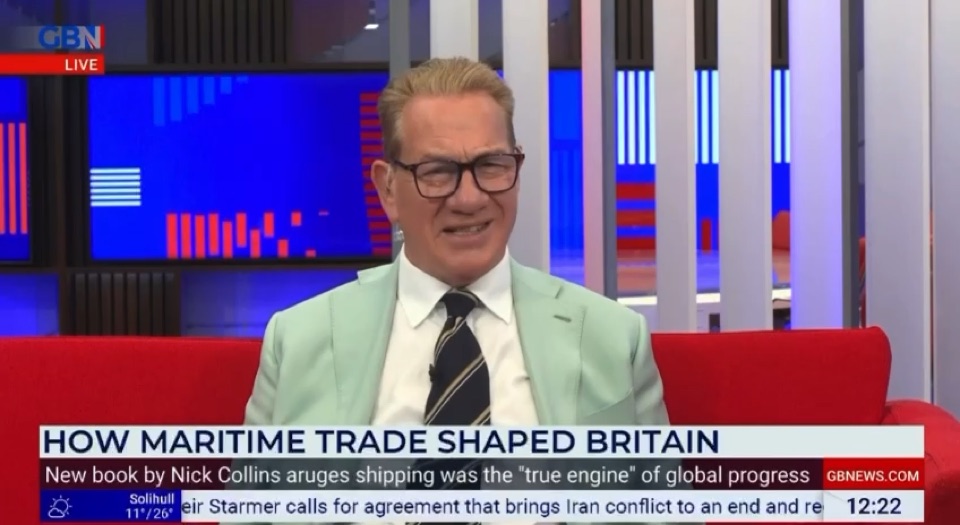
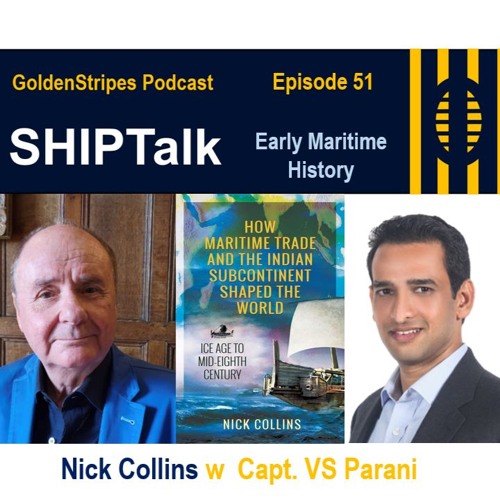
Nick in conversation on maritime history, the Indus-Sarasvati civilisation, and how the sea shaped the ancient and modern worlds.

Nick Collins, author of the Maritime Trade History trilogy
About the Author

Nick Collins

Nick Collins spent nearly four decades working at the centre of maritime trade, across London, Tokyo, Singapore and Dubai. He holds a history degree from Cambridge. That combination – practitioner and scholar – is what makes the trilogy possible, and what makes it different.

His three-volume series argues that maritime trade, not political history or ideology, is the primary driver of civilisation: of wealth, of ideas, of decline. The first volume, How Maritime Trade and the Indian Subcontinent Shaped the World was shortlisted for the Mountbatten Maritime Literary Award. The second, The Millennium Maritime Revolution, examines how Asia lost the maritime supremacy it had held for centuries, and why Europe's rise was far from inevitable. The third, The Ascent of Maritime Trade 1700–2025, traces that story to the present day.

Before the trilogy, Collins wrote The Essential Guide to Chartering and the Dry Freight Market, long regarded as the standard reference for the shipping industry.