My career in maritime trade in London, Tokyo, Singapore and Dubai showed me how pro-active ports are crucibles of innovation. I explore this in a 3-book series, How Maritime Trade and the Indian Subcontinent Shaped the World- Ice Age to mid-8th century, The Millennium Maritime Trade Revolution 700-1700- How Asia Lost Maritime Supremacy and The Ascent of Maritime Trade 1700-2025- Enlightening the World (forthcoming early 2026). I introduce the maritime-continental divide, arguing that societies like Phoenicia, Miletus, Athens, Ptolemaic, Roman Alexandria and Srivijaya outscore continental societies in creativity, diversity and progress, reframing the historical narrative, while offering lessons for today.
Maritime Culture
Maritime societies thrive on problem-solving, navigation, shipbuilding, cross-cultural issues and values, demanding literacy, language skills, numeracy, adaptability and toleration which foster dynamic cultures. South India’s Tamil Sangam and Gujarat’s vast body of ancient literature to ancient Athens’ philosophers to Alexandria’s famous library built by the Ptolomies were repositories of ancient knowledge. In contrast, continental powers like Pharaonic Egypt, early China and early-modern France and Spain were rooted in agrarian stability, resisting change, prioritising control over innovation.
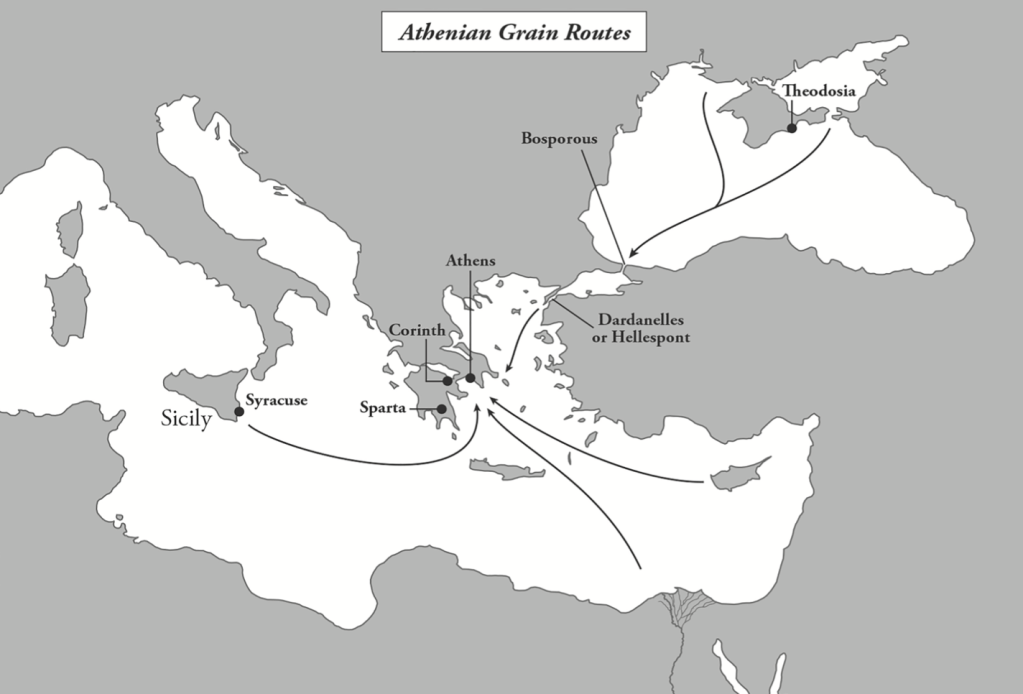
Athens for example thrived culturally and economically because of its need for long-haul food imports, Alexandria as the link to Indian Ocean goods imported to the Mediterranean.
The Longue Durée
The Indian Subcontinent was the earliest centre of maritime vitality, its first ports now found in the Gulf of Cambay, now drowned, dating to the 10th millennium BC. The Indus-Sarasvati civilisation was strongly maritime while Tamil ports documented long-haul commerce. Europe’s ports declined, negatively influenced by continental barbarian invasions, decimating maritime trade in the 6th and 7th century- the Dark Ages. Yet at this time Indian Ocean trade linked Baghdad (founded mid 8th century) to China via Srivijya’s choke point control of Southeast Asia. By the 11th century China was the world’s most advanced society, culturally, industrially, economically and intellectually because of its proactive maritime trade focus, especially by Song Dynasty emperors. When the Ming reversed that in 1372 it started an inevitable decline.
These books challenge Eurocentric narratives because I spent much of my career in Asia’s modern ship-owning, shipbuilding, ship service centres, today’s economically liberal, thriving wealth-creating hubs, echoing ancient Alexandria or 18th-19th-century Britain, the continental-maritime divide echoing down the centuries. This is a call to re-think history’s drivers, what and who drives it forward and what and who hold it back?
The first chapter of my book is available to read for free on Substack. Subscribe to receive new articles.
 Nick Collins
Leave a comment