In Guns, Germs and Steel, Jared Diamond asked how much effect geography had on ‘history’s broad pattern’. He concluded that all societies had inventive people but some environments provide more starting materials and favourable conditions. He concentrated on domestication and the axis of the continents. I contend that ports were the favourable conditions that continued that early progress. There is no better example than those on the Indian Ocean-Mediterranean choke points: i.e. Persian Gulf and Red Sea. Phoenicians were its masters.

Emerging around 3000 BC (or c. 2780 BC, as argued in How Maritime Trade and the Indian Subcontinent Shaped the World), Phoenicians arrived in the Levant and Egypt, supplying Egypt with cedar logs, cedar oil, and regional goods in exchange for linen, papyrus, grain and gold. Ezekiel says they came from Eden, while Roman accounts link them to the Erythraean Sea (encompassing the Red Sea, Persian Gulf, and western Indian Ocean).

Initially settling in Byblos and Tyre, Phoenicians forged trade networks with Mesopotamia and southern Anatolia, linking Indian Ocean commodities to the Mediterranean. The Indian monsoon prevents even today’s ships from entering west coast Indian ports from May to September. Phoenicians, waiting months for favourable winds, absorbed ideas from the world’s intellectual and cultural hub, the Indian subcontinent.

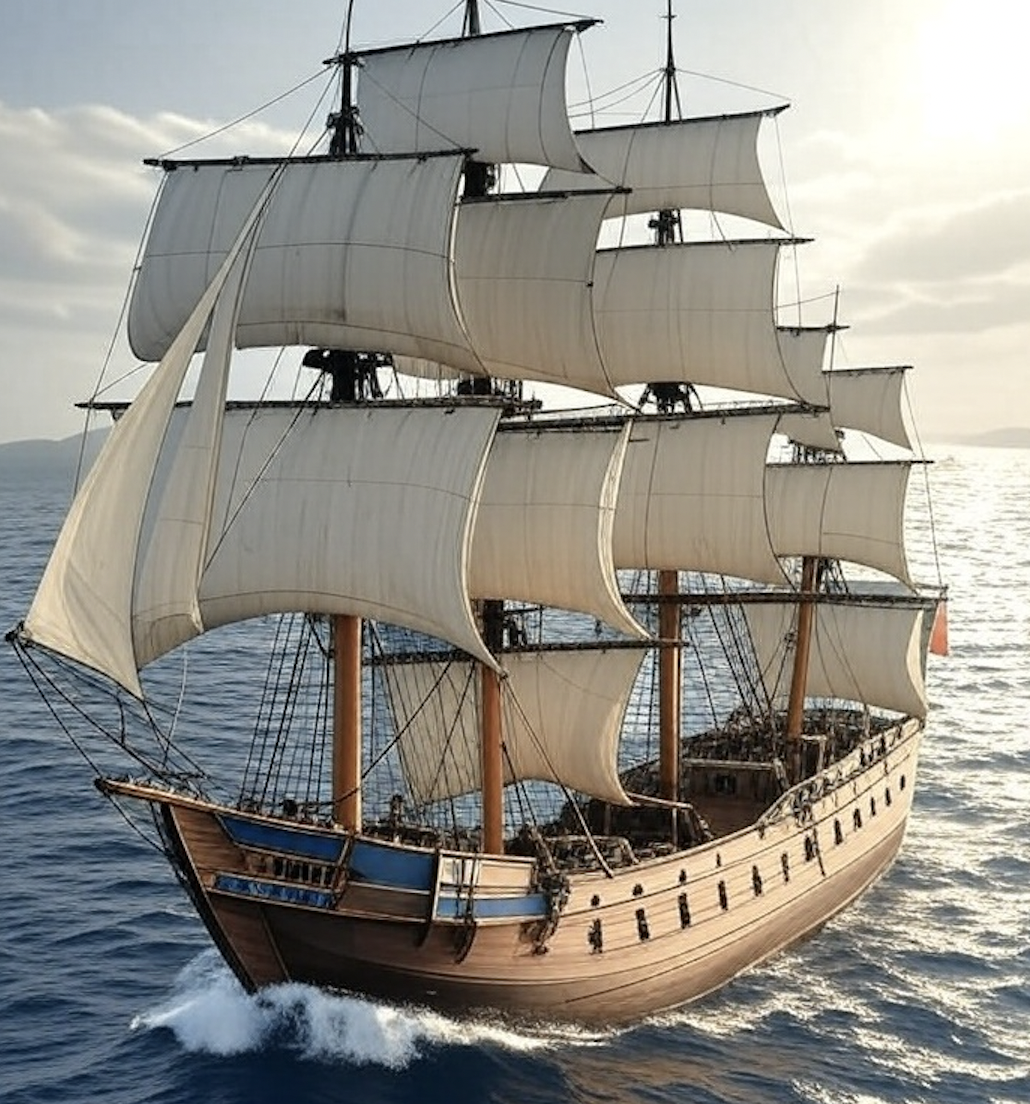
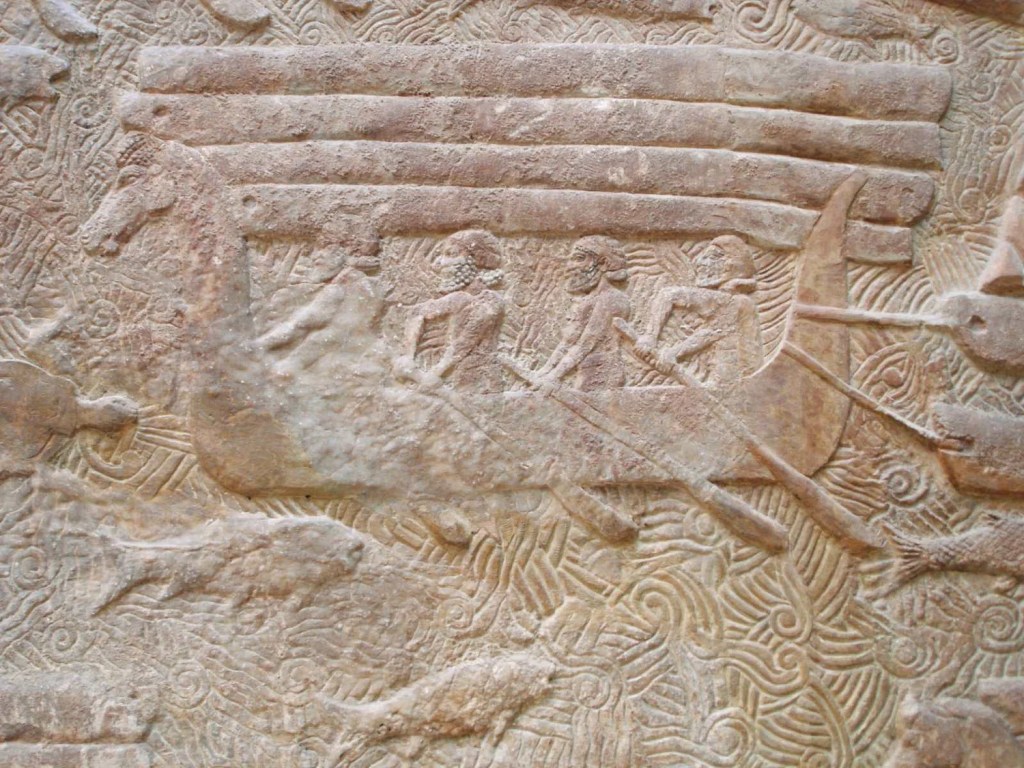
The Solomon-Hiram (Israel-Tyre) trade alliance, detailed in the Bible, involved Phoenician-built and organised ships, crewed by inland primitive Jewish tribes sailed every three years from Israel’s Gulf of Aqaba port to east Africa and India, bringing back great wealth for both kingdoms. Phoenicia developed industries in glass, dyes, metals and embroidery, of the highest quality as described by Homer among others. They were the region’s best engineers, building Solomon’s temple and almost certainly the Marib Dam. All encouraged great knowledge gathering and new learning including in maths, astronomy and philosophy in Tyre and Sidon.

As part of booming trade volumes, the Phoenician alphabet was invented; the origin of all western alphabets, to facilitate bills, contracts, accounts, letters, etc. which spread to Sabaeans (Yemen) as the Marib Dam was built.


Even during the post-Trojan War collapse, the Wen Amun Papyrus reveals the resilient Egyptian-Phoenician trade networks were sustained by partnerships which owned dozens of ships each.

Phoenician merchant enclaves in Greek ports, profoundly influenced Greek culture by being conduits of Indian ideas. It explains the striking similarities between 8th- to 6th-century Greek philosophy and contemporary Indian philosophy, including shared concepts like molecular theory. Parallels also appear in literature: the Iliad and Odyssey resemble the Ramayana and Mahabharata. Both Arjuna and Achilles, for instance, are reluctant warriors in a decade-long conflict. Both involve themes of absence and return, the abduction of a beautiful woman by a foreign man, stories, written formulaic similes and metaphor moulded for each story. As Achilles reflects on war, he develops a philosophy!


Greeks did not miraculously invent western philosophy, expensive warships and iconic buildings suddenly out of a supposed Dark Age. Strabo and other classical writers described Sidonian skills in maths, weights, measures, history, poetry etc. Pythagoras’ father was a Greek merchant working from Sidon who travelled to India, from where his theorem had been used for centuries, if not millennia for altering the size of fire altars. He never claimed he invented it.
When Assyria squeezed and eventually conquered Phoenicia, their solution was emigration across the Mediterranean, establishing colonies as far as Gadir (Cadiz) and valuable metal and food-producing colonies en route in north Africa, Anatolia, Sicily and Sardinia.

Greek philosophy, echoing Buddhist and Jain ideas, adopted river analogies for change and were inspired by the Rig Veda’s Churning of the Ocean as the origin of the world. Thales, deemed the West’s first philosopher by Bertrand Russell, posited water as the world’s origin. Phoenician merchants worked with Jains. They championed non-violence and ending animal sacrifice. Not coincidentally the Levant and Greece ended it shortly thereafter. The Indian lost-wax bronze-casting method (c. 2800 BC) reached Greece via Phoenicians. In medicine, Hippocrates’ maxim, “First, do no harm,” mirrors Ayurvedic principles.

The Phoenicians’ legacy has been undervalued due to their destruction by Assyrians, Babylonians and Persians, flawed chronologies and academic separation of Greek and Indian studies. Bias against the significance of maritime trade and engineering has further obscured their role. These oversights demand rigorous reevaluation.

These arguments are explained in more detail in How Maritime Trade and the Indian Subcontinent shaped the World. The first chapter can be read for free here.
 Nick Collins
Leave a comment