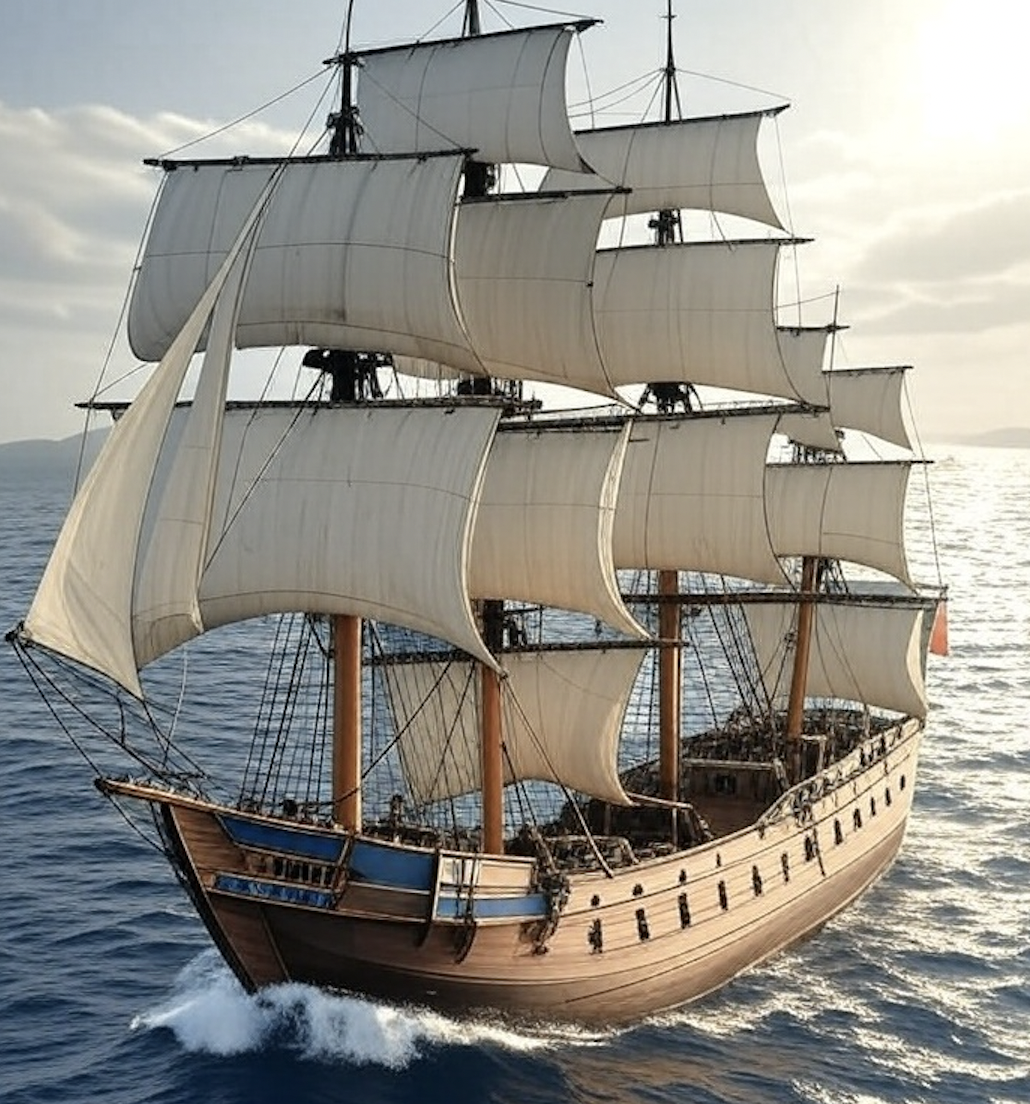

Last month something potentially very significant happened in the maritime trade world, which went largely unnoticed. The IMO (International Maritime Organisation), the UN body regulating global shipping, having done an efficient and competent job since its foundation in 1958, because it is driven by its maritime member states, voted to postpone for a year the implementation of its Net-Zero Framework (NZF). Why?
The easy answer is that Donald Trump who thinks climate alarmism is ’the greatest conjob ever perpetrated on the world, and the NZF ‘a Global Green Scam Tax ‘perpetrated by a “scam Bureaucracy”, pressured member states. The IMO has been working towards the NZF for years, putting in place a ship-by-ship rating system depending on its carbon efficiency so that a NZF could establish a $15 billion green transition fund from 2027, charging $180-380 per ton of CO2 for non-compliant ships while rewarding those who have invested in green solutions. These include new lower carbon or no carbon fuels, sails to reduce fuel consumption and thus emissions. New fuels are tricky. Some are hazardous, costly and do not have a global supply network.
Maersk launched a large green methanol powered ship in July 2025, The MD called it ‘a leap of faith.’ Mitsui is creating its own supply chain of clean ammonia in Namibia made from solar energy, then shipping it to Singapore to bunker ammonia-powered bulk carriers on the Australia-Japan run. These expensive solutions, of which these are just two notable examples, were going to be rewarded under the NZF. Postponement may mean abandonment, if the power balance does not shift, some companies may suffer a serious financial setback.
The more complex answer to Why? is that since climate alarmism peaked in the decade 2010-2020, topping many agendas in the west, after 2020 public support waned due to rising energy prices pursued by zealously puritanical governments like Britain’s and Australia’s. If CO2 was a man-made problem, they would make no difference whatsoever to global warming. In the US, fracking was designed to liberate vast pockets of gas and oil. Since 2009 it has reduced gas prices from $9 to $3/cuft. It ended the 1990s doctrine that the world would soon run out and therefore the rush to renewables was urgent. That is no longer true. US manufacturing has entered a renaissance. Fracking was politically non-partisan and environmentalists hailed it as an ideal interim solution.
In Britain by contrast, not only did governments refuse to frack but in acts of official vandalism poured concrete which private energy companies had drilled at $80 million each down them so they could never be used again. Zealotry bordering on self harming insanity! British North Sea oil profits are taxed at 78% compared with America’s 40%, forcing energy companies to relocate there where they invest, and ship the LNG to Britain. This produces huge emissions in the liquification and re-gassification process. The companies pay tax in the US not Britain. Britain’s North Sea is shutting down and Britain imports from Norwegian fields. With the public paying four-times US price and over twice Europe’s, opposition has grown.
Furthermore, despite CO2 zealots’ claims that the science is settled, increasing numbers of science came forward to dispute it. Silenced on mainstream media, they are loud on social media. Ivan Giaever thought ‘global warming a non problem,’ climate catastrophism ‘a new religion,’ Kary Mullis thinks climate models ‘wrong by a large factor,’ John Clausner, ’there is no climate crisis, Dr Patrick Moore, founder of Greenpeace, ‘complete fabrication…it is a good thing we are putting more CO2 into the atmosphere because it was running low,’ Physicists William Harper and Richard Linden thought CO2 irrelevant. Dr Mototaka Nakamura said that the oceans, sun and clouds are most important. They are the tip of the iceberg in dissenting scientists. Climate is far more complex than a simple CO2 story.
Furthermore people started realising that the dire predictions made since the 1990s of imminent catastrophe have not happened. Not even close. Polar bear numbers are increasing, Kilimanjaro’s snow cap, Arctic and Antarctic are still there and in the last couple of decades getting colder. The Maldives, far from drowning, is thriving on tourism and its corals are a tourist magnet. Moreover, temperatures throughout world history have fluctuated and warmer spells have always been beneficial, colder spells often disastrous.
So climate fatigue is well and truly established in 2025. Many countries did not submit decolonisation plans on time or at all at COP 2025 and the final communique did not even mention fossil fuels. Asian countries – unlike Europe – continue to import coal and gas at similar or larger levels as before. The IMO vote swung because of a changing global mood with China and Saudi Arabia backing the US, while Cyprus and Greece broke EU unity and abstained.
The IMO plan to carry on with the NZF but do not (yet) have funds and another vote will happen next October. Vast vested interests are at work but with opposition rising it is uncertain what will happen. The little-known IMO has become one of the pivots on which this global issue will be fought.
 Nick Collins
Leave a comment