Old historical concepts, which have been proved beyond reasonable doubt to be false, are proving difficult to eradicate due partly to innocent repetition and in some cases, entrenched academic interests.
When evidence is overwhelmingly compelling, why do some individuals seek to suppress debate? History provides numerous examples: Copernicus and Galileo were dismissed by the establishment; evolution was deemed impossible; the existence of Troy was considered a myth until Schliemann, a maverick who challenged the academic orthodoxy, uncovered its remains; and the notion that Native Americans could not have constructed the thousands of mounds and similar structures in North America was prevalent, leading to speculation about a lost, more advanced civilisation. Some individuals are driven by religious agendas, while others seek to protect academic reputations, which could be tarnished if they were to entertain the possibility of revising their views.
Among existing historical mistakes, some of which are understandable matters of opinion, three stand out as especially obvious and problematic because of the considerable detrimental effect they have had on our understanding of the wider narrative. These are the Aryan Invasion of India, the Mediterranean Bronze Age chronology, and the Anglo-Saxon invasion of England.
The Aryan Invasion of India
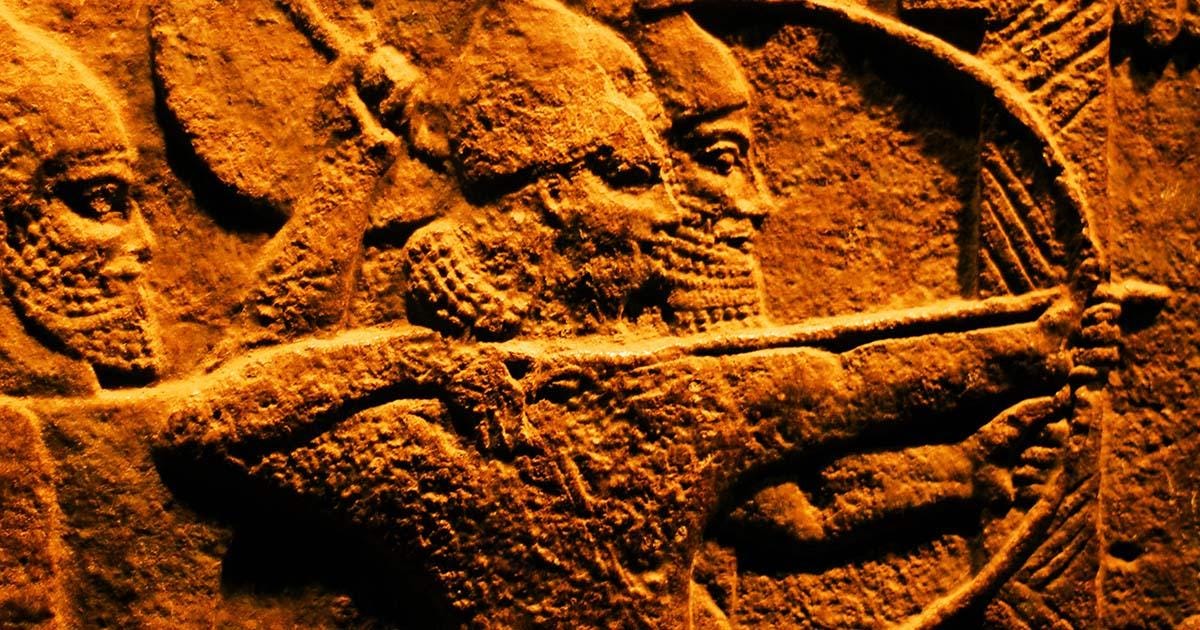
The Aryan Invasion of India from the Eurasian steppe to the north, in what is now Russia or Ukraine, the area not identified, by nomads on chariots which either brought about or destroyed northwest Indian cities, was a mid-19th-century concept based on racial and Christian religious prejudice who found it impossible to believe that the complex beliefs (which they thought ridiculous) and vast body of ancient literature (which they thought inferior to Christian truth) could have evolved indigenously.
They were unlike 18th-century British arrivals in India, products of the British Enlightenment, who were fascinated by Indian culture and history and one, William Jones, discovered that Sanskrit was the mother language of Latin, Greek, and Celtic languages. But this early enlightened view gave way to Christian dogma. It decided that light-skinned Aryans must have invaded from the north, pushing dark-skinned Tamils further south.
It is, of course, nonsense. The lightly populated steppe could not possibly have overwhelmed densely populated northwest India. Moreover, its culture was deeply maritime. The origin of the world was the Churning of the Seas. Gods often have maritime attachments. The Rig Veda talks of profitable sea voyages. The number of Indus-Sarasvati ports uncovered, especially Lothal, indicate vibrant imports and exports to other parts of India and to Yemen, Oman, the Persian Gulf, and Mesopotamia, with references to villages of Meluhha (what Sumerians called India) in Mesopotamian ports, no doubt merchant settlements. Such a complex culture with so many maritime-influenced references are not likely to have had their origins with landlocked steppe nomads.
Academics have been arguing against the Aryan invasion at least since the 1980s. It is now gaining traction on a popular level with the huge middle-class Indian desire to discover and be proud of their indigenous past. Chances of overturning this myth, finally and for good, appear good.
Mediterranean Bronze Age Chronology
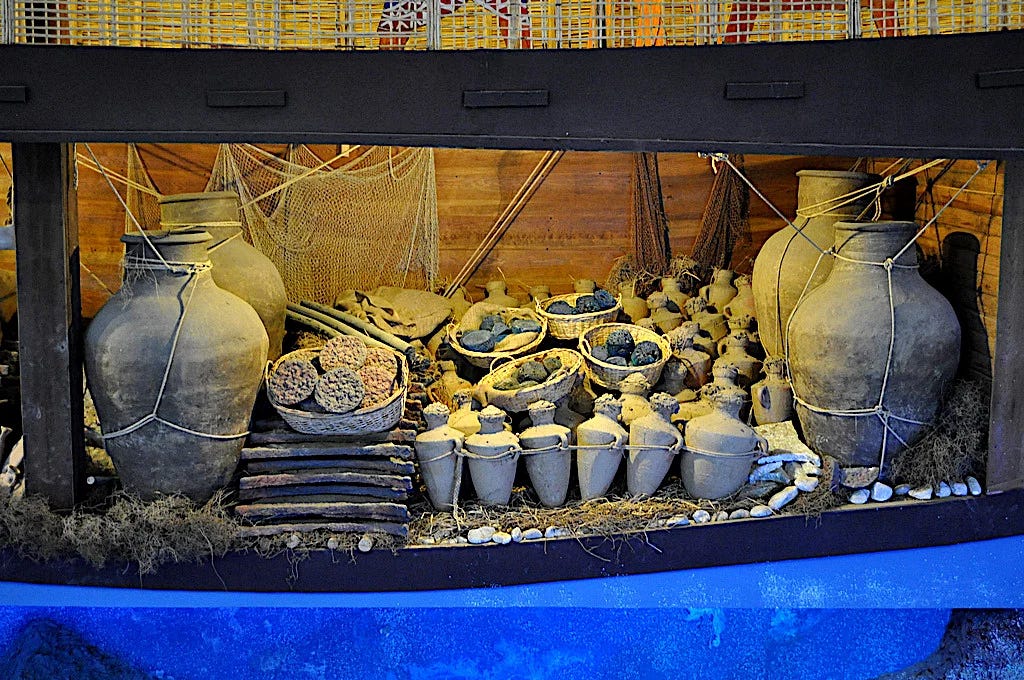
Since the 1970s, some academics have become convinced that the 300-year Dark Age, following the Hittite and Egyptian political collapse and the Trojan War, did not happen. The Dark Age was blamed on these catastrophes, which resulted in a collapsed population, the loss of the knowledge of writing, and how to make pottery. There were no kingdoms, kings, trade, or even any historical sources- not so much a Dark Age as a Black Hole! Then, 300 years later, around 750 BC, everything comes back as if by magic. It is also nonsense.
Why did Etruscans migrate and wait 300 years to exploit its resources? Why did Greeks, having defeated Troy and opened the Black Sea to get to its rich grain-growing lands and export its rich fishing grounds, wait 300 years to establish Black Sea colonies as bases to ship it back? The deconstruction of the myth started with the 1981 book ‘Centuries of Darkness’ and continued with books and articles placing the Trojan War not in 1188 or 1177 BC but around 880–930 BC.
Unlike the Aryan Invasion, this myth does not denigrate a nation’s history. It is thus proving more difficult to gain acceptance of the alternative. Egyptologists especially, who know the sequence of New Kingdom pharaohs, show little interest outside Egypt, and are unconcerned about how it is wrong and what detrimental effects it has on other fields. Endless TV documentaries on ancient Egypt use the old dates without even a reference to other theories. Mesopotamian dates are influenced by Egyptian dating, and unlike in Northern Europe, few if any radiocarbon datings have been done. No need! For Egyptologists, they have a comfortable framework.
Chances of overturning this myth appear more problematic. One hope is that because Indian history is partly dated with reference to Mesopotamian dating -also partly dependent on Egyptian history and also wrong – and partly by radiocarbon dating, then it is also understandably confused and confusing.
Some support from Indian historians on the revised dates would be welcome. Otherwise it may take decades to overturn this Centuries of Darkness myth because actually this should really be called Centuries of Enlightenment-when iron quickly overtook bronze, Mediterranean literature in the Levant, then Greece, accelerated development, maritime trade accelerated and -not unrelated- the Phoenician alphabet was invented as volumes grew bigger and easier ways of recording it were needed. Easier to understand than all others, it became widely used in the Mediterranean and the Red Sea and was the ancestor of all European scripts.
The Anglo-Saxon Invasion of England
The third is that Anglo-Saxons invaded England, such an ongoing threat even before the Romans left in 410 that Saxon Shore forts were built to repel them. Recent excavations reveal they actually acted as grain depots to ship to the Roman army on the Rhine and that the Saxon Shore was so named because it was where Saxons lived, having been recruited by the Romans to help keep order. A cursory glance at a Saxon Shore fort like Portchester will demonstrate very light defences and most toward the land.
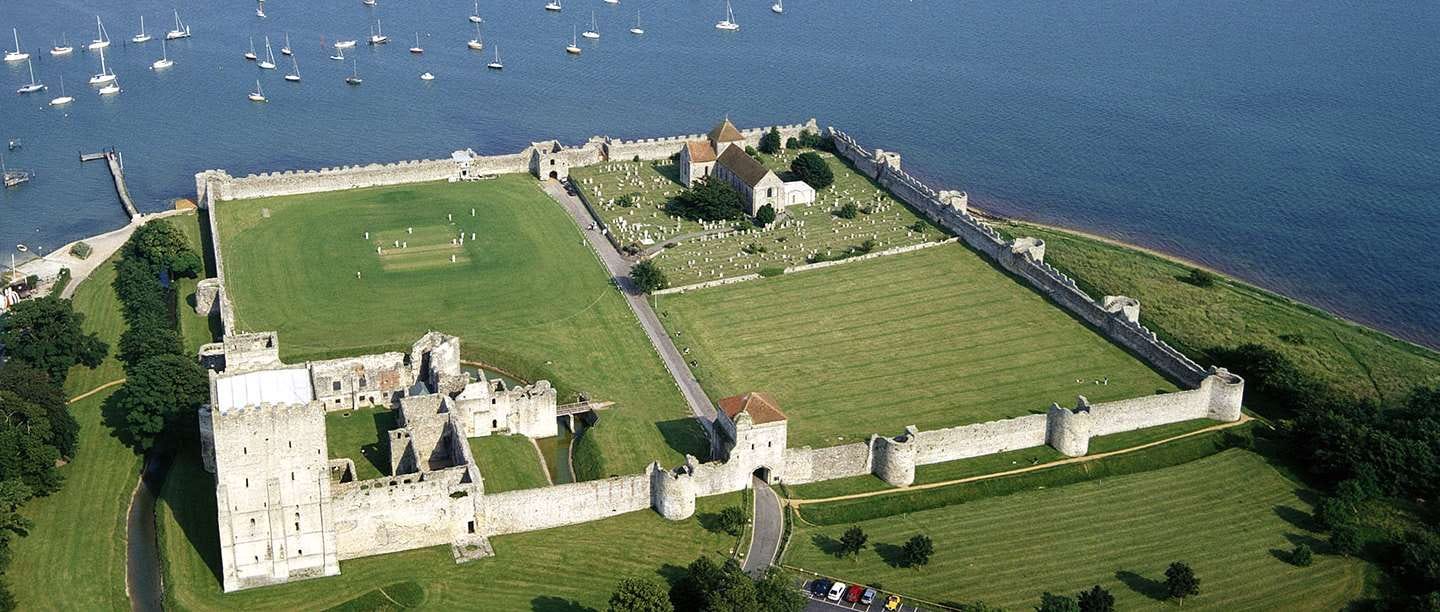
When the Roman legions left, Saxons continued to be hired or invited by British tribes fighting each other and especially defending themselves against Scots, Picts, and Irish who raided far to the south. A number of books have revealed this story, and they are summarised in ‘How Maritime Trade and the Indian Subcontinent Shaped the World’ (2021).
It is thus only the start of rolling back this simple myth and explaining the far more interesting true story. The enemy of truth in this instance is lazy TV documentaries that refer to invasion and Anglo-Saxons rather than explain who exactly they were, and more problematically by linguists and universities’ Anglo-Saxon literature departments, which are heavily invested in explaining that the Anglo-Saxon language evolved into the English of Chaucer in a few hundred years while changing every word and sentence construction.
Let’s hope a backlash that is happening in India about their past can overcome entrenched interests in the other two areas.
Footnotes
1. Aryan Invasion
Suggested reading:
Koenraad Elsst- Update on the Aryan Invasion Debate 1999
Michel Danino- The Lost River- On the Trail of the Sarasvati
NS Rajaran- Asian Invasion- History or Politics- Archaeology Online
Vimla Patel- Seven Sacred Rivers- Lifelines of Indian Civilisation –www.esanskrit.com
Romala Thapar- Early India (2002)
Michel Danino -Genetics and the Aryan Debate (Archaeology Online)
David Frawley- Gods, Sages and Kings (1991)
Shafer in Lukas – The People of South Asia (1984) pp 84-85
Collins- How Maritime Trade and the Indian Subcontinent Shaped the World (2021) summarises the above and more
2. Bronze Age Chronology
Suggested reading:
Peter James et al – Centuries of Darkness (1981)
Sir Alan Gardener – Egypt of the Pharaohs (1961) pp46-47, 53, 429-453
AR Burn – The Pelican History of Greece (1966) p 53
Fernand Braudel- The Mediterranean in the Ancient World (1969) pp 203, 228-236
Bimson and Livingstone- – Redating th Exodus. BAR Sept-Oct 1987
John Bimson – The origins of Israel in Canaan – An examination of recent theories- (biblestiudies.org)
www.centutries.co.uk List of reviews
A Test of Time- David Rohl
http://www.centuries.co.uk/uluburun.pdf
Manfred Bietak- A Review of Manning- a Test of Time- Bibliotecha Orientalist LXI (2004)
Nikos Kokkinos -Ancient Chronology. Eratosthenes and the Dating of the Fall of Troy- Ancient West and East 8-(2004) pp 35-56
Bernard Newgrosh- Chronology and the Crossroads- the late Bronze Age in Western Asia (2007)
Collins- How Maritime Trade and the Indian Subcontinent Shaped the World summarises these and more
3. Anglo Saxon Invasion
Suggested reading:
Russel and Laycock – Unroman Britain – Exposing the Great Myth of Britannia (2010) pp, 190-191, 206, 208
Stuart Laycock -Britannia- the Failed State (2008)
Francis Pryor – Britain AD (2005) pp 135-144
Simon Elliot -Sea Eagles of Empire p 175
Ken Dark- Britain and the End of the Roman Empire p 33
Nick Collins- How Maritime trade and the Indian Subcontinent Shaped the World- summarises these and more
 Nick Collins
Leave a comment